Mastering the Julier Pass
While many high alpine roads hibernate under meters of snow, the Julier Pass remains a vital, cleared artery connecting the Engadin valley with the rest of Switzerland.
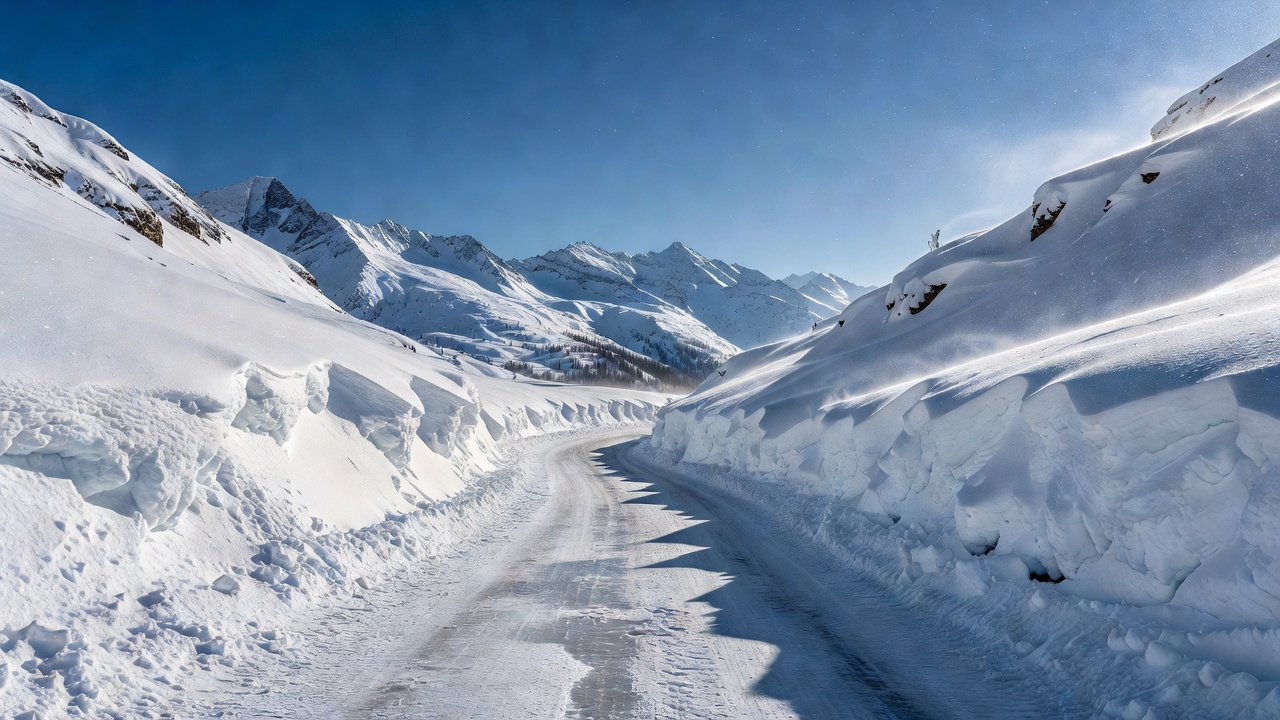
The Swiss Alps are an engineering marvel, boasting some of the highest, most intricate road networks in Europe. Come winter, major passes like the Furka and Stelvio close entirely. Yet, local infrastructure demands that certain routes remain passable. The Julier Pass (Passo del Giulia), cresting at 2,284 meters, is kept open year-round by relentless plowing operations. Driving it in winter is a mesmerizing experience of crisp mountain air, towering snow walls, and tight hairpin bends.
The climb from Tiefencastel towards St. Moritz takes you through classic alpine scenery. The lower valleys may be clear, but as elevation increases, the landscape transitions into a stark, white expanse. The road itself is a testament to Swiss efficiency, regularly cleared down to the tarmac, though heavy snowfall can temporarily coat the surface in slush and packed snow.
Vehicle Requirements and Chains
Winter tires are not explicitly mandated by Swiss law, but driving without them in winter conditions leaves you entirely liable in an accident. In practice, they are mandatory for a trip like this. Additionally, the Julier Pass frequently displays mandatory snow chain signs during active snowstorms. If the blue sign featuring a white tire with chains is illuminated, you must fit chains to your driven wheels—regardless of whether you have four-wheel drive.
Practicing chain fitment in a dry, warm garage before your trip is vital. Attempting to figure out the latching mechanism on a dark, freezing incline while traffic waits is a stressful ordeal to be avoided at all costs.
Driving Technique on Gradients
The ascents and descents of the Julier Pass are steep. Ascending requires smooth throttle application; spinning the wheels generates heat, which melts the snow into a layer of water, instantly killing traction. Momentum is key, but it must be controlled.
Descending is significantly more perilous. Relying entirely on the brake pedal will quickly overheat the brake fluid, leading to brake fade and total loss of stopping power. You must use engine braking. Shift into a lower gear (even in automatic vehicles, use the manual select mode) and let the engine's compression hold your speed in check, touching the brakes only to shed speed before corners.
The Postbus Priority
On Swiss alpine roads, the bright yellow Postbus has absolute priority. When you hear their distinctive three-tone horn echoing near a blind corner, stop and yield space. They require the entire width of the road to navigate hairpins, and reversing uphill to make way for them is incredibly difficult in snow.
Scenery and Stops
Near the summit, the Hospiz offers a stark architectural contrast to the mountainous backdrop. The frozen lakes of Silvaplana and Sils lie waiting at the descent into the Engadin valley, frequently dotted with snow-kiters taking advantage of the Maloja wind. The stark contrast between the bright blue alpine sky and the blindingly white snow requires good quality polarized sunglasses to prevent snow blindness.
Verdict
The Julier Pass is accessible but demands respect. Because it is a commercial and transit route, you will share the road with local commuters and delivery trucks who drive it daily at pace. Stay calm, use the pullouts to let faster traffic pass, and focus on smooth inputs. It offers the quintessential European winter driving experience, complete with world-class engineering and breathtaking vistas.