Navigating the Icefields Parkway in Deep Winter
Spanning 232 kilometers between Lake Louise and Jasper, Highway 93 transforms into one of the most stunning—and demanding—winter driving routes in the world.
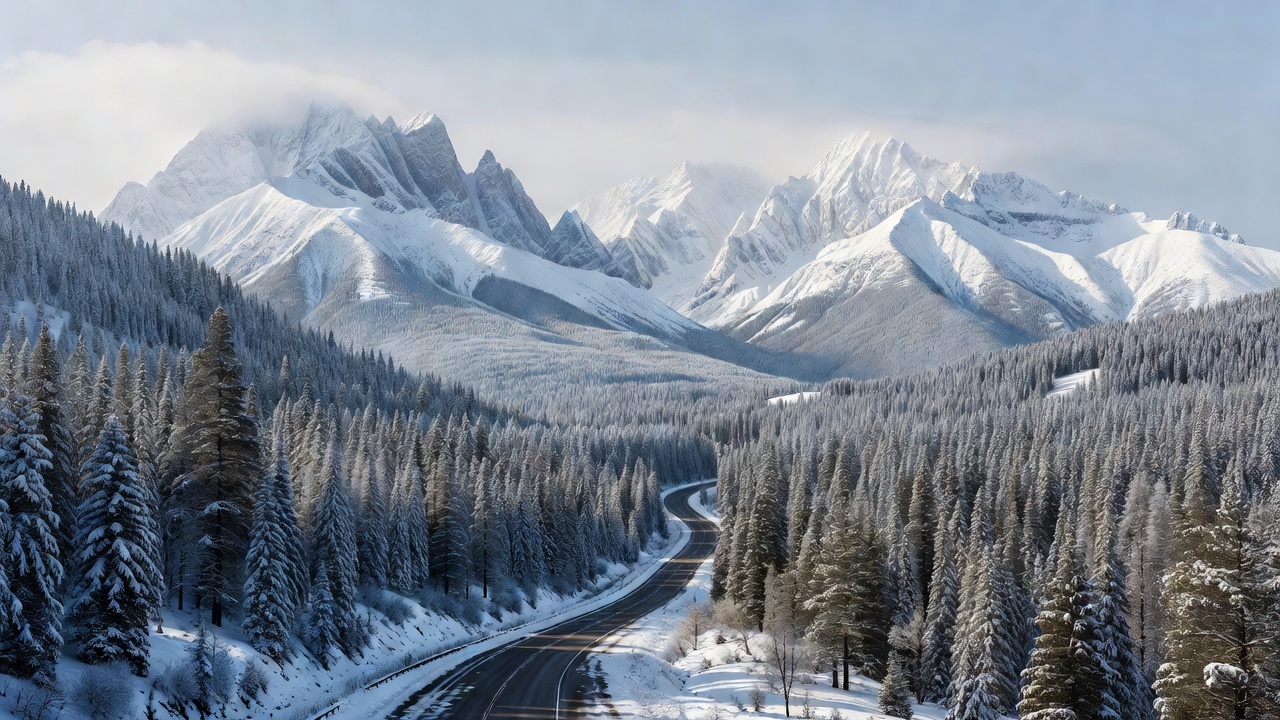
The Canadian Rockies in winter present a study in profound isolation and monumental scale. When the summer crowds disperse, the Icefields Parkway (Highway 93) reclaims its wild character. Enormous glaciers hang suspended over valleys, frozen waterfalls cling to sheer rock faces, and the dense pine forests disappear beneath heavy mantles of snow. Driving this route requires respect for the elements and a reliable vehicle, but the visual rewards are incomparable.
Because cellular service is non-existent for the vast majority of the parkway, preparation is not just a recommendation; it is a fundamental requirement. Every winter, drivers who underestimate the Rockies find themselves awaiting rescue in sub-zero temperatures. Understanding the road conditions, necessary equipment, and the landscape itself ensures that your journey remains a scenic adventure rather than a survival situation.
Route Overview
The journey begins at Lake Louise in Banff National Park and concludes in Jasper. The entire stretch takes roughly three hours in ideal summer conditions. In winter, however, allow a minimum of five to six hours of driving time, excluding stops. The road climbs through high-altitude passes, notably Bow Summit at 2,067 meters, where weather systems can stall, causing rapid whiteouts.
Unlike major transcontinental highways, the Icefields Parkway receives no salt treatment. Parks Canada uses sand and plows, meaning that for most of the winter, you are driving on a hard-packed surface of snow and ice. The speed limit of 90 km/h (55 mph) should be viewed as an absolute maximum in ideal conditions, and frequently must be reduced by half.
Essential Vehicle Preparation
Attempting this drive without proper winter tires is not only foolish, but it is also illegal. Between November 1 and April 1, vehicles traveling the Icefields Parkway must be equipped with winter tires bearing the three-peak mountain snowflake (3PMSF) symbol, or mud and snow (M+S) tires in excellent condition. True winter tires are vastly superior on hard-packed ice.
Your vehicle must be stocked with a winter survival kit. This should include:
- A robust snow shovel and ice scraper.
- Extra warm clothing, thermal blankets, and high-energy food.
- A full tank of fuel (there are no open gas stations between Saskatchewan River Crossing and Jasper during winter).
- A paper map, as GPS reliance is risky without signal.
The Threat of Avalanches
The Parkway passes through numerous avalanche zones. You are strictly forbidden from stopping in these areas, marked clearly by signage. Keep moving, and check daily avalanche bulletins from Parks Canada before setting out.
Visual Highlights and Stops
While hiking is limited due to deep snow and avalanche risk, the pullouts provide magnificent viewing platforms. Bow Lake offers an expansive, frozen plain reflecting the surrounding peaks, while the Columbia Icefield presents a wall of glacial ice that feels close enough to touch. At Athabasca Falls, the water forces its way through the frozen gorge, creating spectacular ice formations.
Verdict
The Icefields Parkway in winter is an unyielding environment that demands serious respect from motorists. If you are comfortable driving on winter surfaces and are adequately prepared, it offers unparalleled access to some of the planet's most dramatic winter scenery. It is a route that forces you to slow down, literally and metaphorically, allowing the immense silence of the snowy landscape to take hold.