The Deep Powder Byways
Japan's northernmost island receives some of the heaviest snowfall on the planet. Driving here is an exercise in navigating through pristine, meter-high corridors of white.
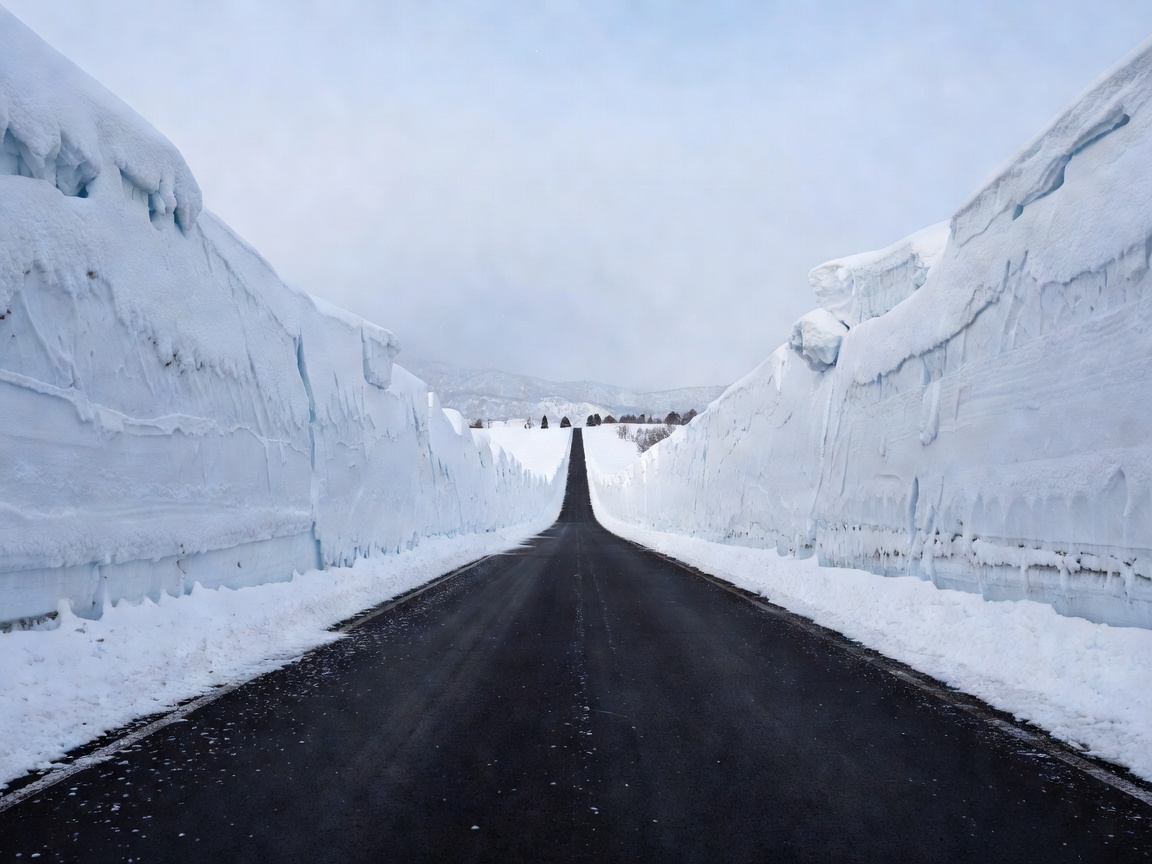
Hokkaido in winter is synonymous with "Japow"—the exceptionally dry, deep powder snow that draws skiers from around the globe. But moving between these world-class resorts and the isolated hot spring (onsen) towns requires taking to the roads. The landscape here is vastly different from the craggy Alps; it features rolling plains, volcanic calderas, and perfectly straight farming roads lined with birch trees.
The scale of snow clearance in Hokkaido is staggering. Massive rotary plows cut through drifts, creating trenches that can reach several meters in height. Driving through these snow walls is both claustrophobic and awe-inspiring, as the white banks block out the surrounding plains, focusing your attention entirely on the strip of road ahead.
Road Infrastructure and Visual Cues
Because the edges of the road are entirely obscured by snowdrifts, local authorities install distinctive downward-pointing red and white arrows suspended high above the carriageway. These "snow poles" indicate exactly where the road edge is located. Paying attention to these arrows is critical; drifting slightly off course means plunging into a soft, deep ditch that requires professional recovery.
Speed limits are strictly enforced and naturally slow. The rural roads typically carry a limit of 50 km/h, which drops in towns. The Japanese drive with remarkable politeness and caution, and tailgating in winter conditions is exceptionally rare. You are expected to mirror this patient driving style.
Vehicle Selection and Navigation
Renting a vehicle in Hokkaido requires an International Driving Permit. You should explicitly request a four-wheel-drive vehicle (4WD) fitted with studless winter tires. Unlike Norway, studded tires were banned in Japan in the 1990s due to dust pollution, so Japanese tire manufacturers developed highly advanced rubber compounds filled with micro-bubbles that grip the ice exceptionally well.
Most rental cars come with GPS navigation systems, though the interfaces can occasionally be entirely in Japanese. Using the "Mapcode" system or inputting the destination's phone number is the easiest way to navigate if you cannot read Kanji characters.
Wildlife Hazards: Ezo Deer
The Ezo deer population in Hokkaido is substantial. They frequently wander onto the roads at dawn and dusk. Because the snow walls flank the roads, deer often use the cleared tarmac to travel, leaving them trapped in the "trench" with your vehicle. Scan the road ahead constantly and brake early.
Scenery and Stops
A typical route might take you from Sapporo through the volcanic landscape of Shikotsu-Toya National Park, and up toward the Biei and Furano regions. In winter, Biei is famous for its solitary trees standing starkly against vast, rolling fields of untouched snow—a minimalist aesthetic that defines Japanese winter photography. Pulling over to warm up at a roadside vending machine offering hot canned coffee is a quintessential part of the experience.
Verdict
Hokkaido offers a profoundly peaceful winter driving experience. The combination of meticulous road maintenance, polite local drivers, and ethereal, snow-drenched landscapes makes it far less intimidating than navigating an icy alpine pass. It is a slow, methodical journey through some of the finest winter scenery in Asia.